SaaS Is Dead. Long Live SaaS.
The frontier AI labs are vertically integrating the deployment economy they were supposed to be replacing.
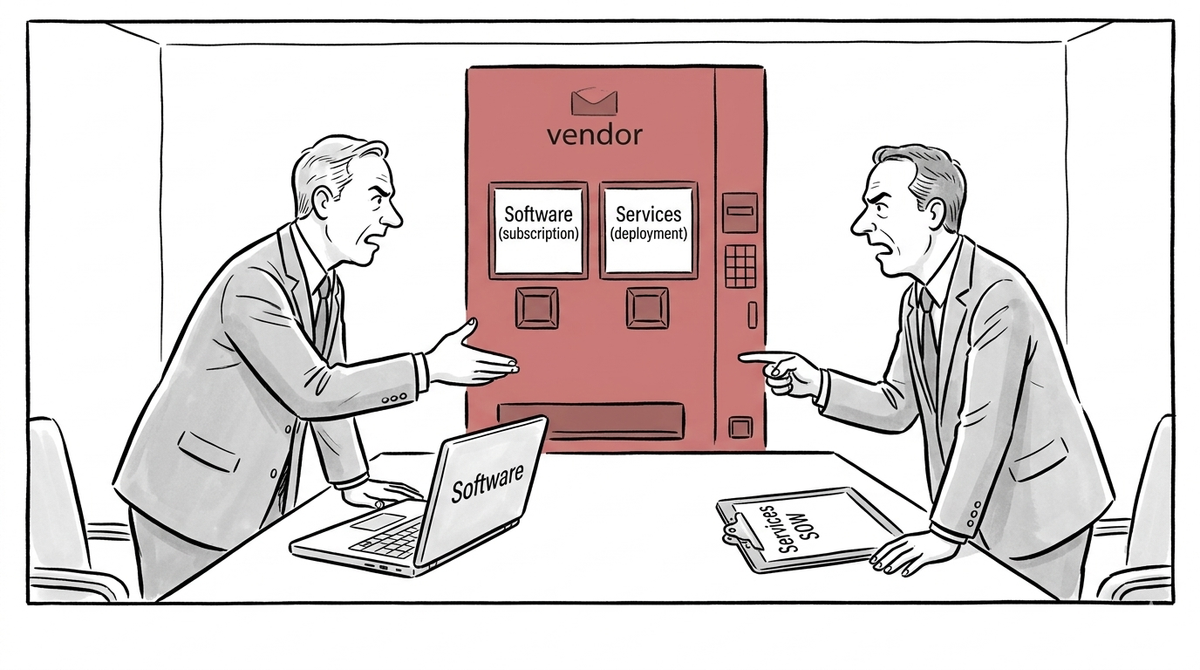
Last week I argued the proof-of-concept motion is broken and the Forward Deployed Engineer is the symptom of what comes next. This week the harder line: the labs that pioneered the FDE motion are quietly turning themselves back into the consulting firms they were supposed to replace. By the time ServiceNow and Accenture launched a joint FDE programme in May 2026, with 300 pre-built agent skills delivered through co-deployed pods, the motion had escaped the labs and become hyperscaler distribution. Two weeks later, the labs went further.
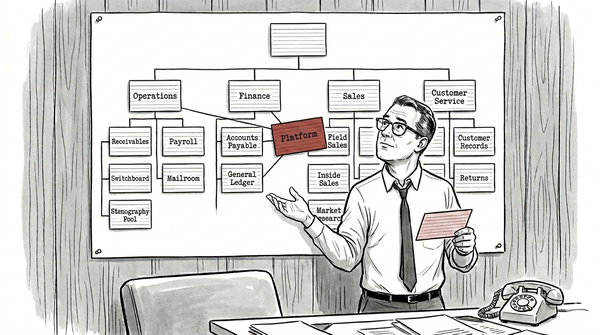
The deal in the original SaaS bargain was simple. Software replaces services. You stop paying consultants by the year to install your CRM; you pay a vendor to host it instead. The line item marked Implementation Services gets thinner. The line item marked Software Subscription gets fatter. Total spend doesn't shrink, exactly — the ratio shifts. And the ratio was the whole point.
That deal is being unwound. As of last month, the frontier AI labs are quietly turning themselves back into the consulting firms they were supposed to be replacing.
The pitch and the punchline
The pitch was always about the line item. Sequoia's Services-as-Software thesis, published earlier this year, made the argument cleanly: the global services market is many times the size of the global software market, and AI is what lets a software company finally go after it. It is a clarifying read of where AI value accrues. It also raises an obvious next question, which the essay leaves open. Who, exactly, is going to do the collecting?
The answer arrived on 4 May.
That morning, OpenAI finalised The Deployment Company, a $10 billion joint venture with TPG, Brookfield, Advent, Bain, Dragoneer, and SoftBank, anchored by more than $4 billion of fresh capital across nineteen investors. The same day, Anthropic announced its own $1.5 billion services vehicle with Blackstone, Hellman & Friedman, and Goldman Sachs Asset Management, each tied to roughly $300 million in commitments. Both deals borrow openly from Palantir's forward-deployed-engineer playbook: embed the lab's own engineers inside customer environments, accountable for the deployment, the integration, and the outcome.
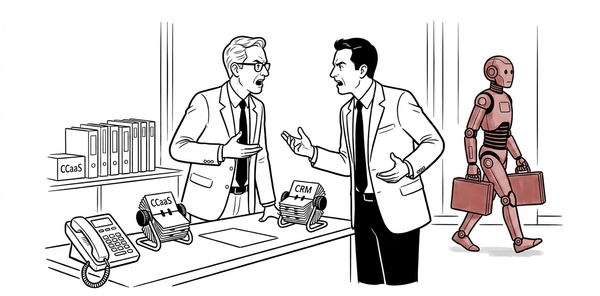
Read those two announcements together and the pattern is unmistakable. The labs are no longer selling you software that replaces consultants. They are selling you the consultants, too.
What enterprises can't buy alone
The pitch works because enterprises know they can't deploy this alone, and the labs have figured out exactly which gaps to fill.
The first gap is technical. The team running your contact-centre platform was hired to manage telephony and IVR scripts, not to wire a frontier model into Workday, your case management system, and a 1990s data schema that disagrees with itself. Hiring those people takes the better part of a year, sometimes longer. The labs are offering to bring the people.
The second is commercial. Procurement knows how to price seats. It does not know how to price an outcome. The labs are offering to write the contract and carry the risk if they miss.
The third is cultural. Nobody inside a 5,000-person company is rewarded for betting the year's headcount budget on an unproven deployment. They are rewarded for hiring Goldman, Blackstone, or Bain — names that carry their own institutional cover. The labs are offering to bring the names.
Bundle the three and the result is what they are now calling "services." It is the word that has just been redefined.
We've seen this play before
This is not a new play. My read: it's a remix of the original Salesforce one.
By the mid-2000s, Salesforce was selling the world the public cloud version of CRM. The pitch had the same shape: stop paying consultants by the year to install Siebel, pay us a subscription instead. The part the keynote slides skip is what followed. The software was easy to buy and almost impossible to deploy. So Salesforce built an ecosystem of certified consultants — Trailblazers, in the brand-approved register — and sold them too. Three-year implementations. Margin in both lines, routed back to the same vendor.
The labs are running the same play with two upgrades. The PE backing replaces the organic partner ecosystem, with Bain and Brookfield writing cheques against a guaranteed return. And the branding has been refreshed: Trailblazer was a marketing word, Forward-Deployed Engineer is the same role with a Palantir veneer.
The inversion that matters is the direction of the trade. Salesforce used consultants to deploy software. The labs are using software to deploy the services that software was supposed to be replacing. The line item shrinks on the way in and grows on the way out, with the same vendor on both ends.
What you're actually signing
For the CCO reading this, the question is not whether the labs are right that frontier AI is hard to deploy. It clearly is. The question is what you are signing on the way through.
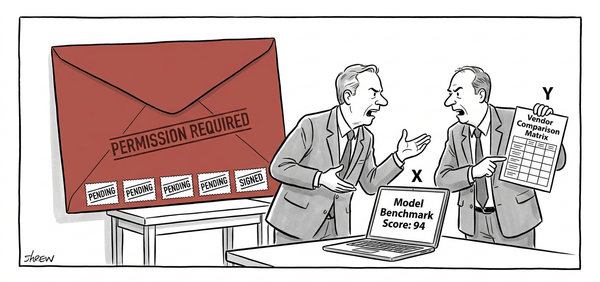
Bloomberg reported that OpenAI is guaranteeing The Deployment Company's PE backers a 17.5% annual return over five years. That number does not come from compute. It comes from the customer's services line. When you sign your next agentic-CX deal, you are not signing a software contract. You are signing a software-plus-deployment-services contract whose true margin sits in JV equity returns to financial sponsors, not on the line item your finance team can see.
Two things can be true. Frontier models are harder to deploy than CRUD SaaS, and the labs may be honestly absorbing complexity that enterprise buyers cannot yet carry. The question is whether that complexity is real and temporary, with the labs as the only adults in the room while integrations standardise, or manufactured and structural, with the labs writing the next decade of services revenue back to themselves before procurement opens.
The Salesforce era taught CFOs how to drive consultants out of the operating model. It took painful renewals to make it stick. The labs are now offering to put them back, with a different badge and a fresh narrative.
Here is the question I would put to any CCO signing in the next two quarters. Are you buying agents — or buying back the consultants you spent ten years getting off the books?
The answer is in the contract. Not the licence one. The other one.